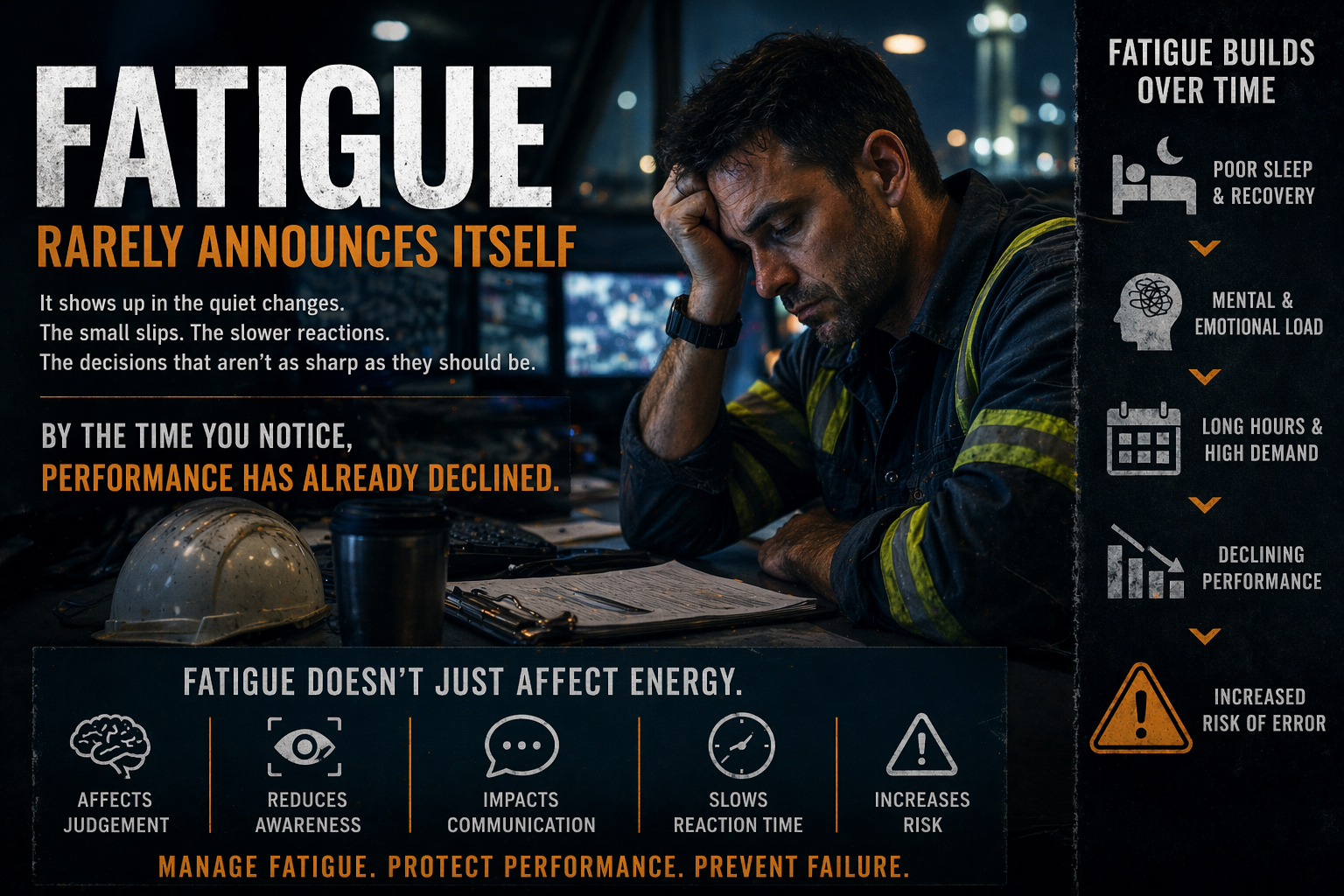
Fatigue Rarely Announces Itself
Fatigue is often mistaken for simple tiredness, but its real impact is usually seen in judgement, patience, communication and decision-making long before exhaustion is visible. This article explores why fatigue is one of the most underestimated risks to performance, leadership and resilience.
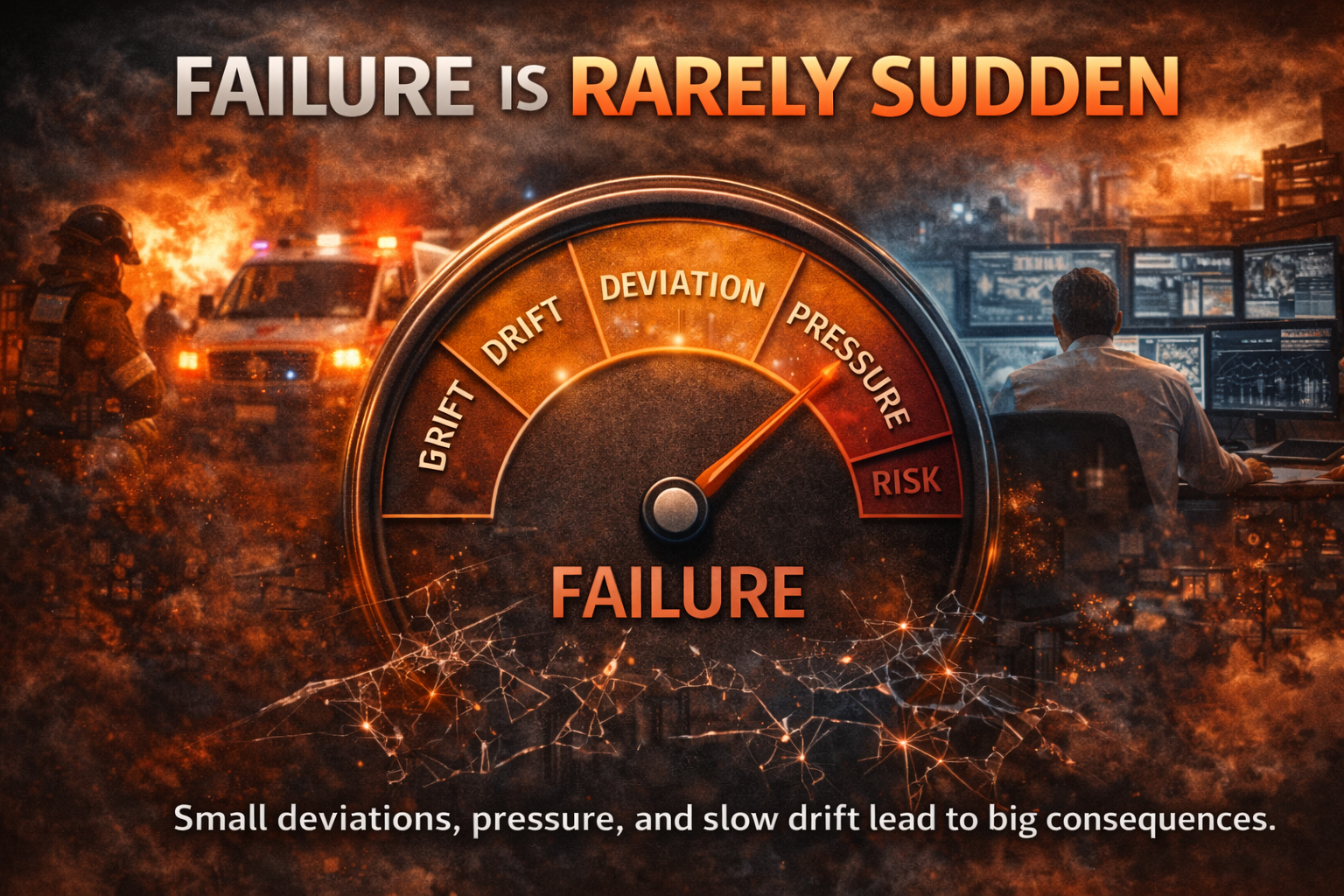
Failure Is Rarely Sudden
Failure is often viewed as a sudden event, but in reality, it is usually the result of gradual change. This article explores how small deviations, pressure, and normalised behaviours create the conditions for failure, and why effective organisations focus on early indicators rather than just outcomes.
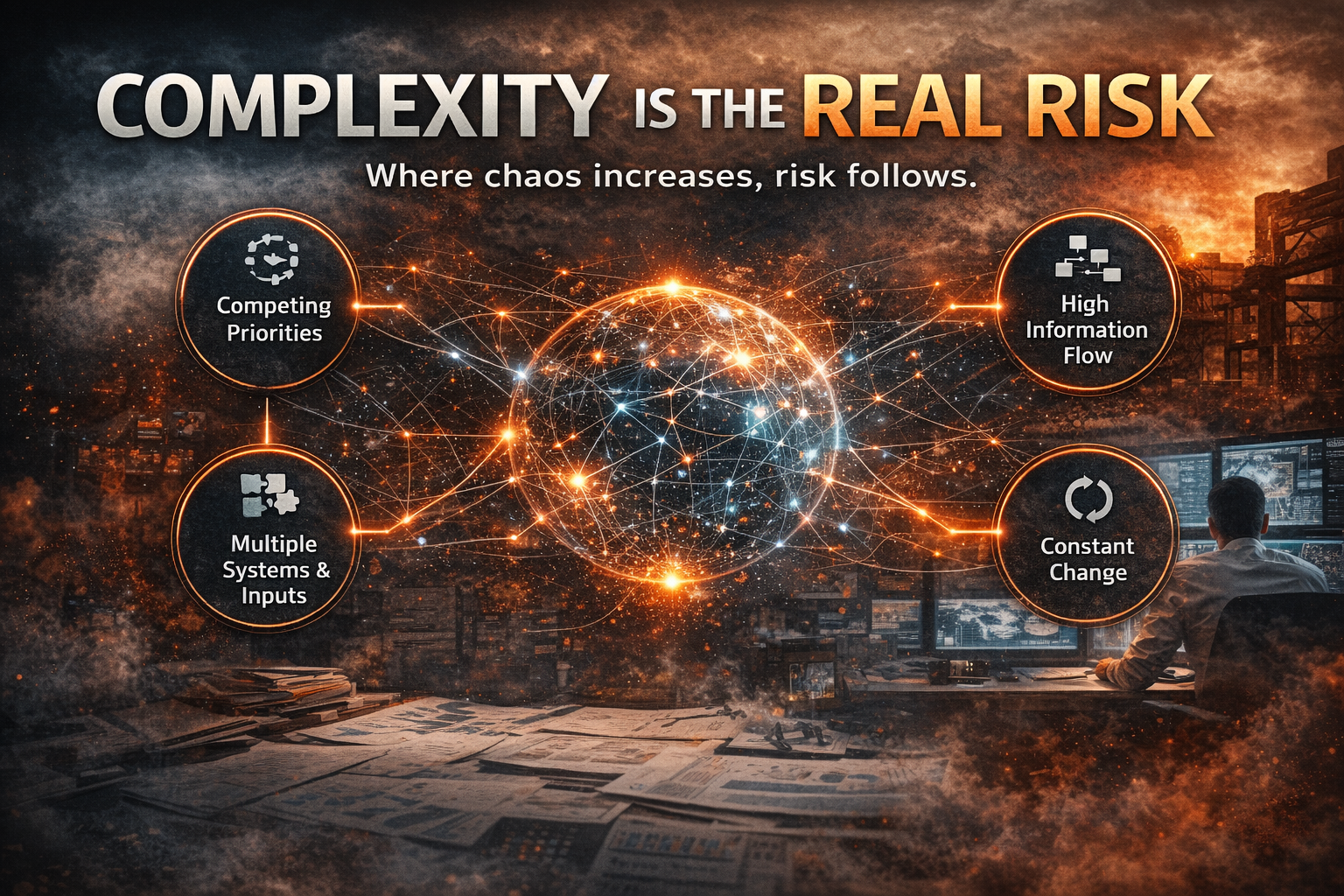
Complexity Is the Real Risk
Risk is often viewed as a specific event or failure. In reality, it is frequently shaped by the complexity of the environment in which people operate. This article explores how complexity influences decision-making, performance, and organisational resilience, and why clarity is critical in high-demand environments.
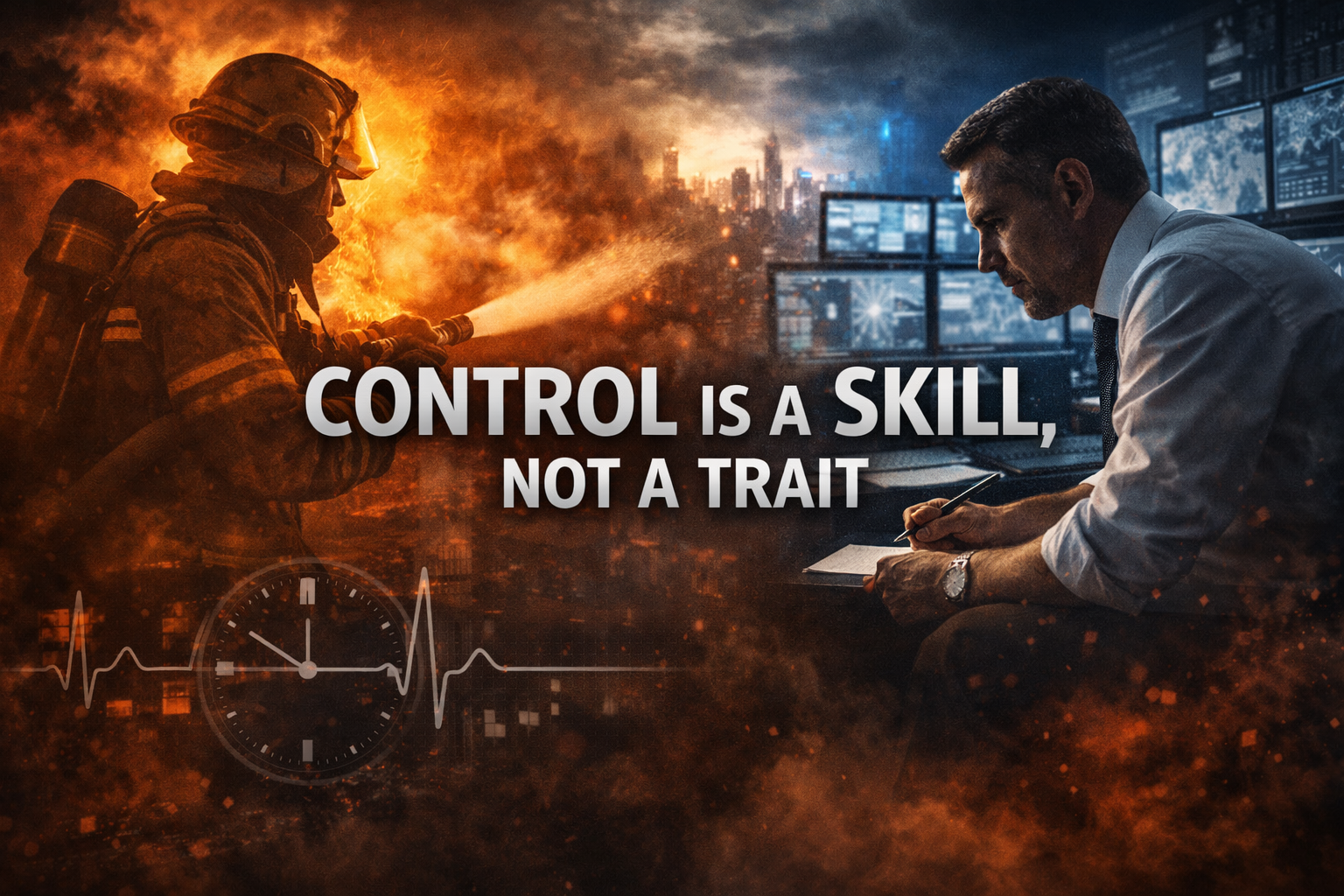
Control Is a Skill, Not a Trait
Control is often viewed as a personal trait, something shaped by confidence or experience. In reality, it is a trainable capability that determines how individuals and teams perform under pressure. This article explores why control sits at the centre of decision-making, performance, and organisational resilience.
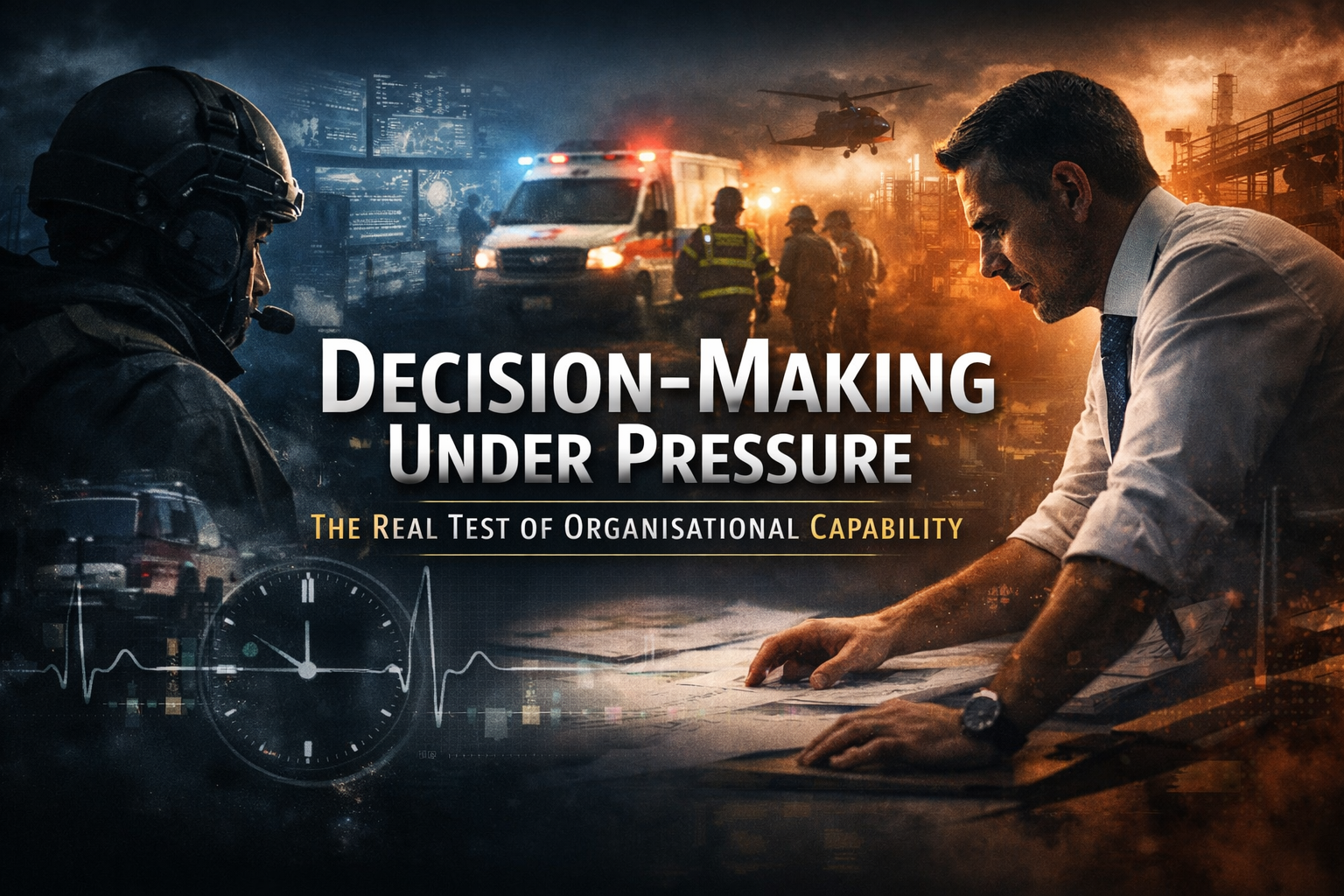
Decision-Making Under Pressure
Strong decision-making is often assumed to be a function of experience or process. In reality, pressure, uncertainty, and cognitive load can significantly affect judgement. This article examines decision-making under pressure and why it sits at the intersection of leadership, high performance, and organisational resilience.
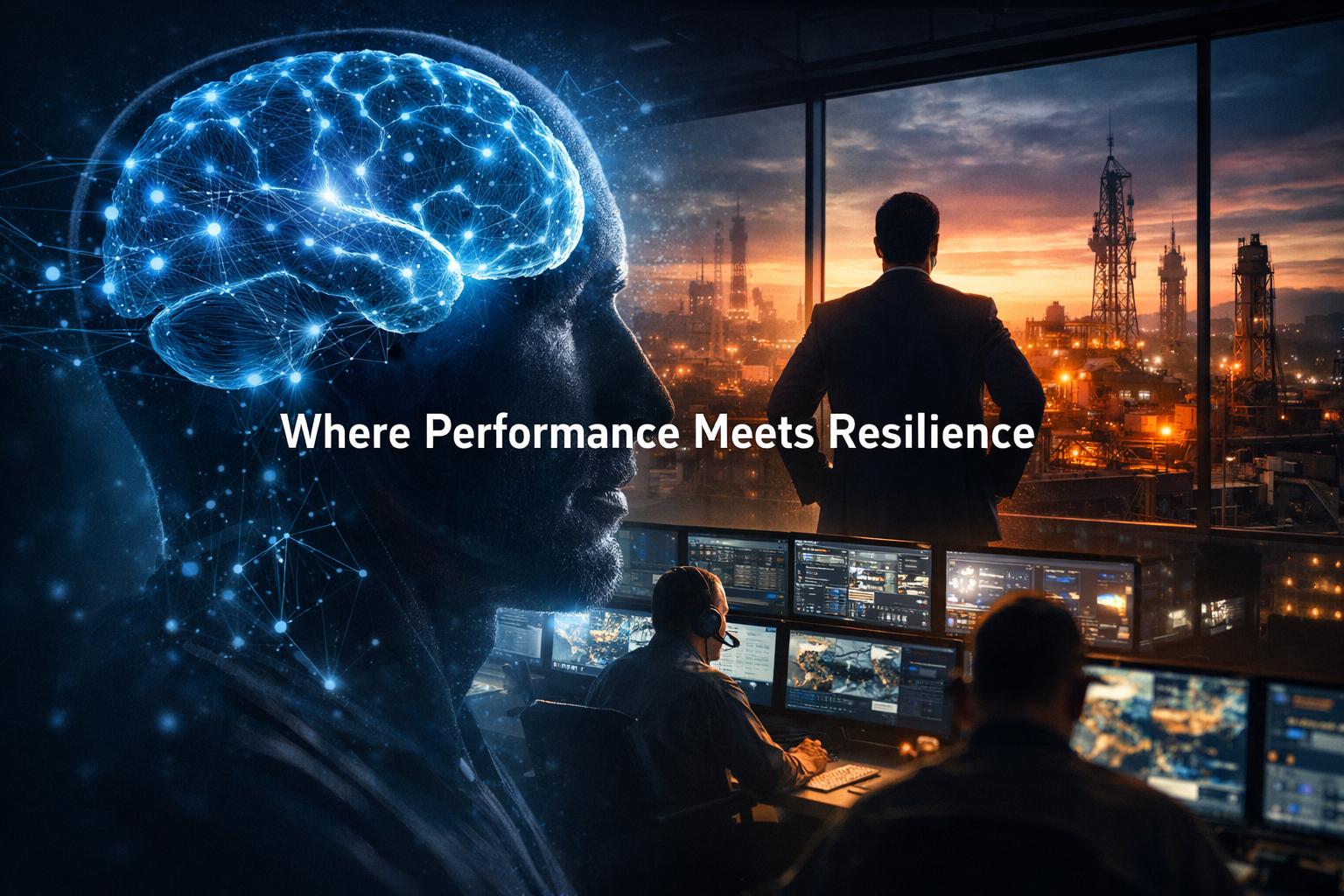
Where High Performance Meets Risk and Resilience
High performance and organisational resilience are often treated as separate disciplines. In reality, they are deeply interconnected. This article explores how human performance under pressure determines whether risk frameworks succeed or fail, and why resilient organisations invest as much in people as they do in systems.
The Noise Before the Mistake
“The Noise Before the Mistake”
It’s never the big mistake you see coming, It’s the quiet one, the missed word, the half-heard cue, the thought that didn’t quite land.
Mistakes don’t start loud, they start silent, in the mind of someone almost focused enough.
In high-tempo environments, pit lane, control room, operations floor; focus thins before it breaks.
And once it thins, errors chain.
One distraction links to another until performance unravels, elite performers know this.
They build micro-resets, deliberate moments to clear the noise before it becomes chaos.
A breath. A glance. A word that brings the team back online. Because by the time the mistake is loud, it’s already too late.
Full article: The Noise Before the Mistake – Focus degradation in high-tempo environments.
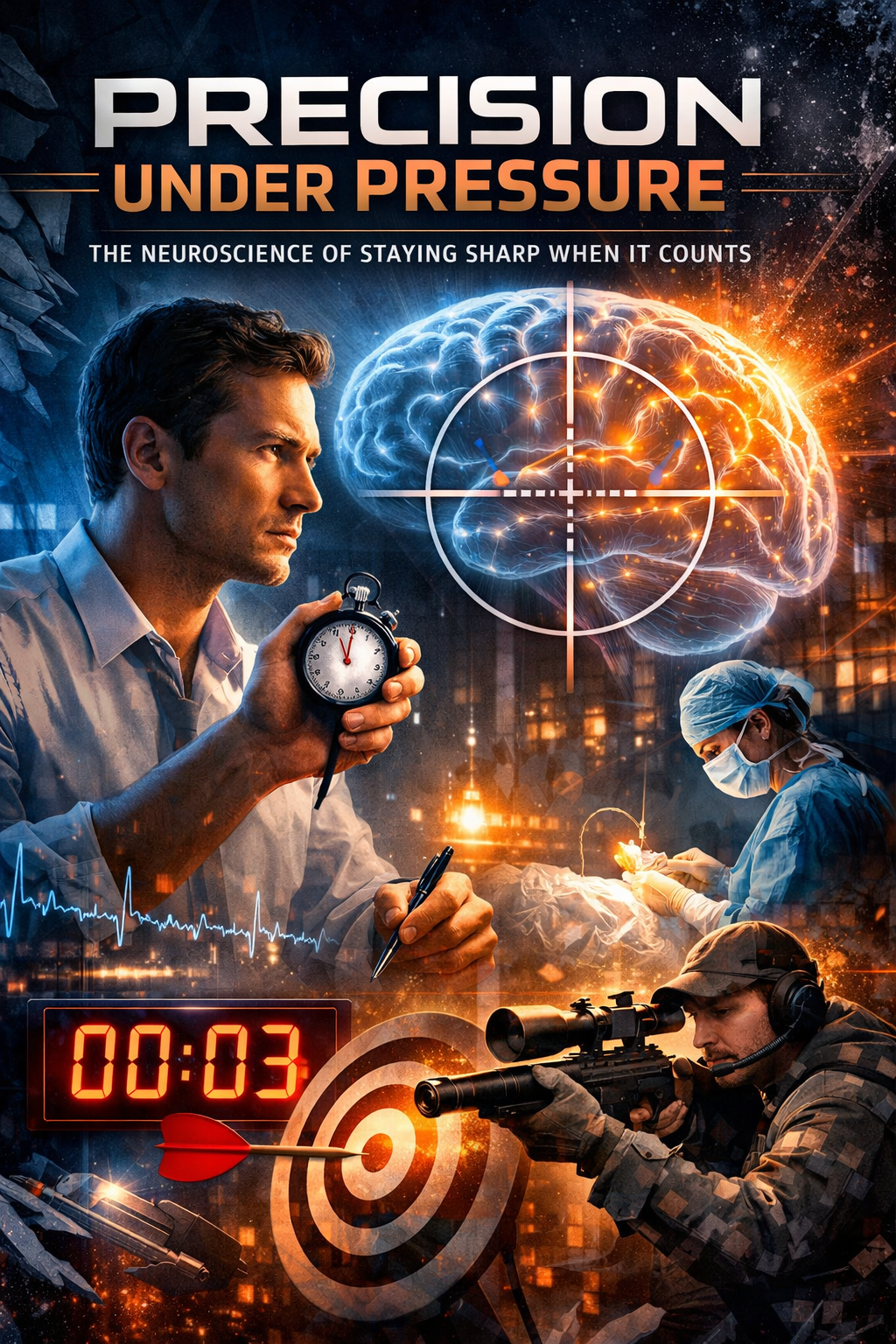
Precision Under Pressure: The Neuroscience of Staying Sharp When It Counts
When pressure hits, you don’t rise to the occasion - you fall to your level of preparation.
From pit crews to crisis teams, elite performance isn’t about talent under stress; it’s about conditioning for it. This article explores the neuroscience behind pressure, cognitive narrowing, and the mental loops that allow high-performers to stay precise when it matters most.