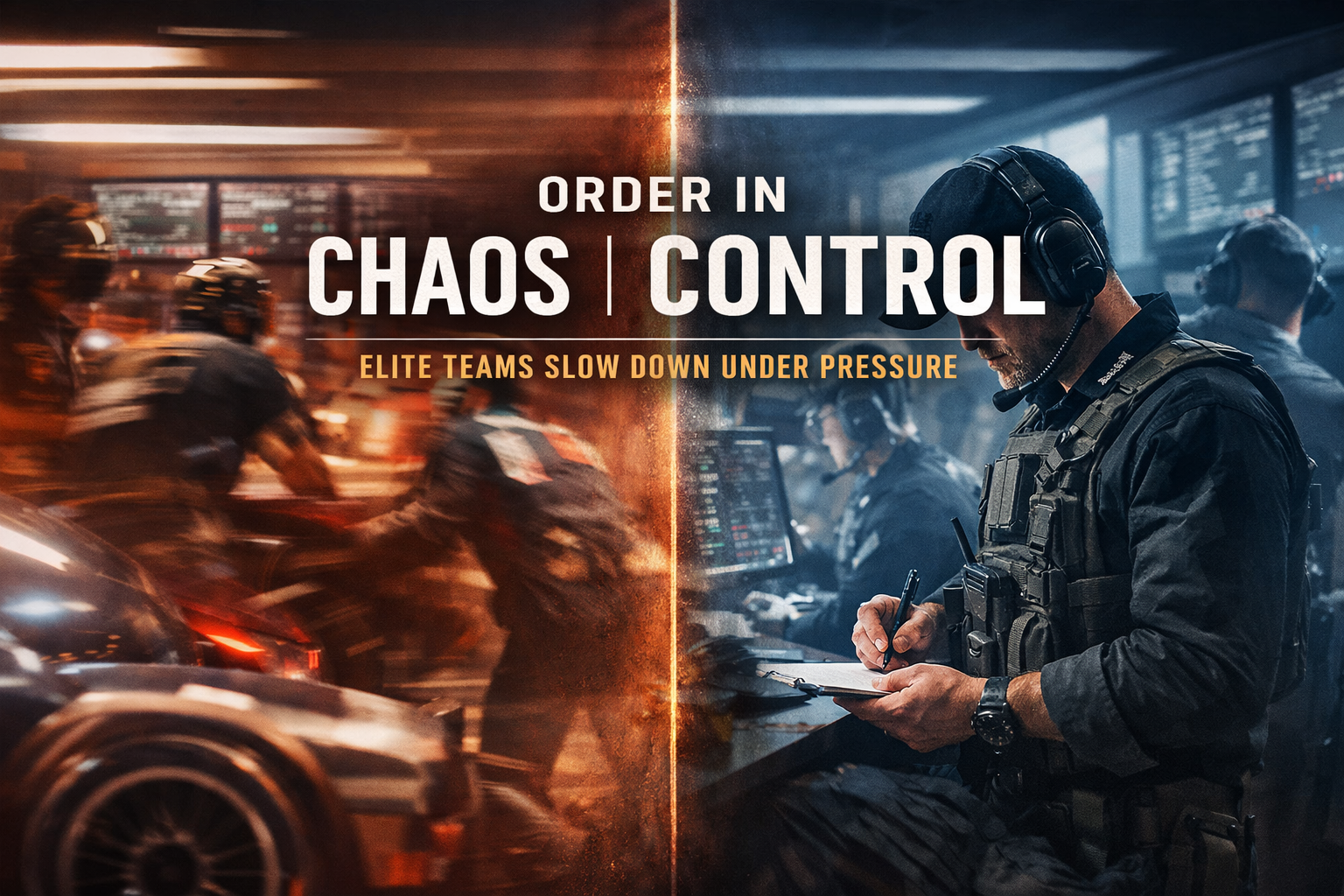
Order in Chaos: Why Elite Teams Slow Down When Pressure Spikes
When pressure spikes, most teams instinctively try to move faster.
Elite teams do the opposite. They slow down just enough to regain clarity, restore coordination, and prevent small mistakes from cascading into failure in high-tempo environments.

The Illusion of High Performance: When a Team Thinks They’re Better Than They Are
Teams rarely fail because of one big mistake.
They fail because they believed they were performing at a higher level than they actually were, and no one challenged that illusion.
Misalignment hides in plain sight:
Egos over standards.
Chaos disguised as “urgency.”
Internal conflict written off as “personality differences.”
And when real pressure hits, things unravel fast.
I’ve seen it in policing, in military environments, in motorsport, and in corporate sectors, the moment a team stops being honest with itself, performance is no longer real. It becomes theatre.
Here’s an article I’ve written on the illusion of high performance, and what happens when a team thinks they’re operating at an elite level…but can’t hold their calm when it matters most.
The Noise Before the Mistake
“The Noise Before the Mistake”
It’s never the big mistake you see coming, It’s the quiet one, the missed word, the half-heard cue, the thought that didn’t quite land.
Mistakes don’t start loud, they start silent, in the mind of someone almost focused enough.
In high-tempo environments, pit lane, control room, operations floor; focus thins before it breaks.
And once it thins, errors chain.
One distraction links to another until performance unravels, elite performers know this.
They build micro-resets, deliberate moments to clear the noise before it becomes chaos.
A breath. A glance. A word that brings the team back online. Because by the time the mistake is loud, it’s already too late.
Full article: The Noise Before the Mistake – Focus degradation in high-tempo environments.
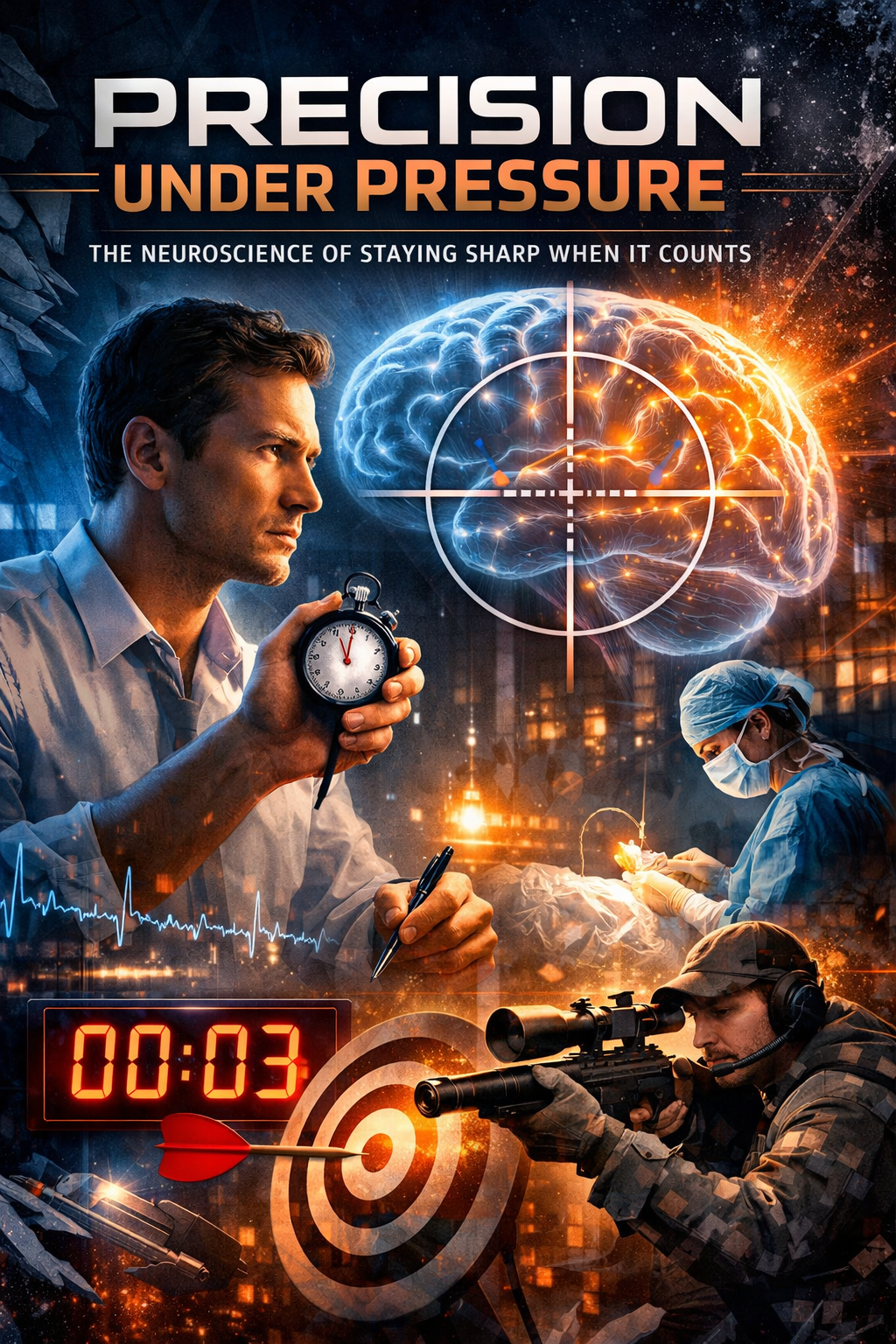
Precision Under Pressure: The Neuroscience of Staying Sharp When It Counts
When pressure hits, you don’t rise to the occasion - you fall to your level of preparation.
From pit crews to crisis teams, elite performance isn’t about talent under stress; it’s about conditioning for it. This article explores the neuroscience behind pressure, cognitive narrowing, and the mental loops that allow high-performers to stay precise when it matters most.
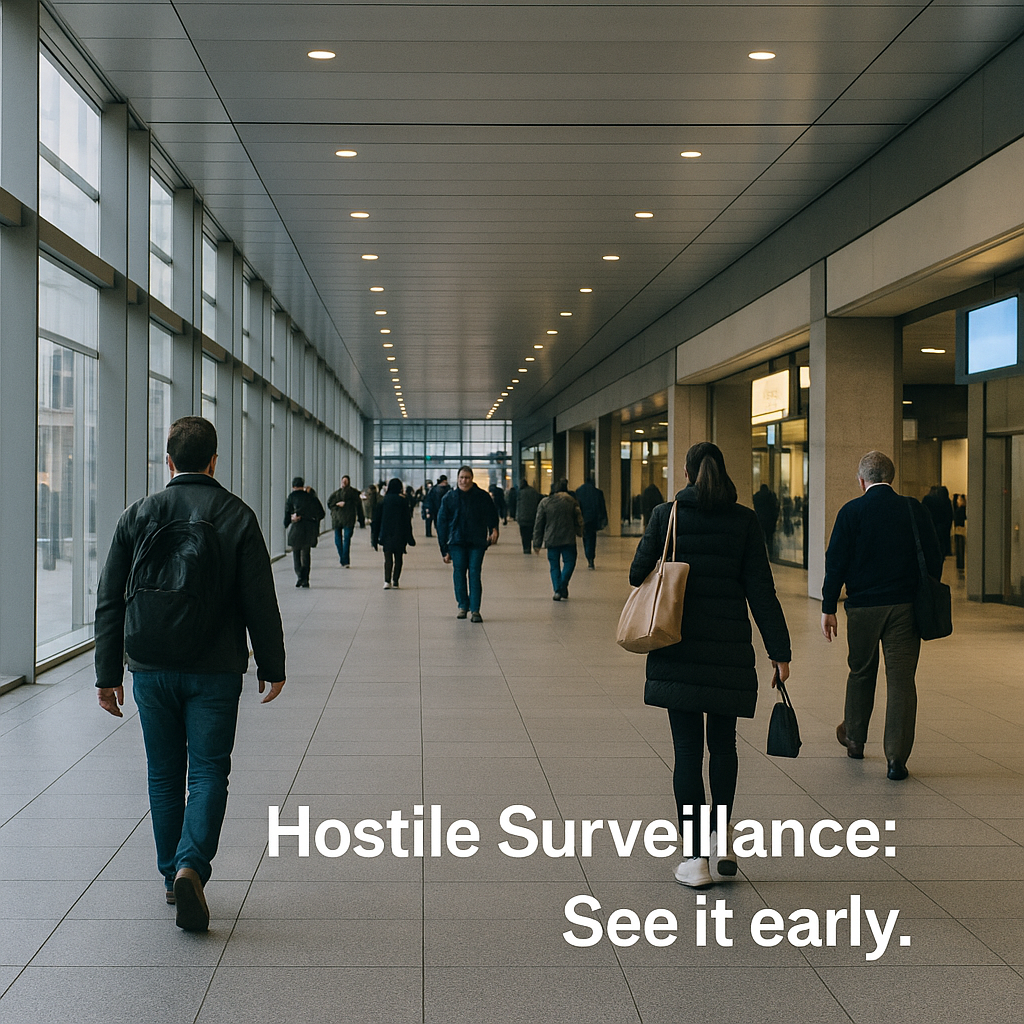
Hostile Surveillance: The Threat You Only Notice When It’s Too Late
I’m sitting with a takeaway coffee. I could stand up and leave at any time. For three weeks, I watched the same person arrive, move, and interact, repeating patterns they didn’t realise were visible. It sounds like a movie script. It wasn’t. It was hostile surveillance, and it happens far more often than most people think.
Hostile surveillance isn’t random curiosity. It’s deliberate observation with intent to harm, used to map routines, identify gaps, and test security responses long before an incident occurs. For those responsible for venues, events, campuses, executives, or public spaces, it’s often the earliest, and most humane—point of intervention.
This article breaks down what trained eyes actually notice, how simple frontline engagement can surface risk early, and why catching patterns, not moments, is the foundation of effective prevention.